
PODCASTS > Arcat Detailed Podcast Episode
172: Triple-pane Bird-Friendly Glass | Ryerson Woods Education Center
59m 41s |
In this episode, Cherise is joined by Matt Wallace, Partner, and John Taylor (or JT) Schaffhauser, Associate at Lake Flato Architects with offices in San Antonio and Austin, Texas, and Portland, Oregon. They discuss the Ryerson Woods Education Center in Deerfield, Illinois.
Situated at the threshold between woodland and water along the Des Plaines River, the Ryerson Woods Education Center emerges as both refuge and instrument—an architecture that listens as much as it teaches. Positioned within the delicate ecology of the flatwoods, the building does not assert itself over the landscape, but instead operates as a quiet mediator, framing the rhythms of the forest while inviting visitors into a deeper understanding of its systems. Part of this system that integrates respect for nature is the exterior’s triple-pane bird-friendly glass, the first of its kind to be certified Phius in the U.S.
Click here for the extended length interview on YouTube
Situated at the threshold between woodland and water along the Des Plaines River, the Ryerson Woods Education Center emerges as both refuge and instrument—an architecture that listens as much as it teaches. Positioned within the delicate ecology of the flatwoods, the building does not assert itself over the landscape, but instead operates as a quiet mediator, framing the rhythms of the forest while inviting visitors into a deeper understanding of its systems. Part of this system that integrates respect for nature is the exterior’s triple-pane bird-friendly glass, the first of its kind to be certified Phius in the U.S.
Click here for the extended length interview on YouTube



John Taylor Schaffhauser, AIA, Associate, Lake Flato Architects
John Taylor known to many as JT is deeply committed to responsible stewardship of the natural environment. As one of Lake Flatos Certified Passive House Consultants, he brings a wealth of technical expertise in high-performance design strategies to every project, including the firms first certified Passive House project in northern Illinois. Outside of his work in Lake Flatos Eco-Conservation Studio, JT is dedicated to international humanitarian aid and development, frequently volunteering as an architect to design buildings for remote, underserved communities and NGOs around the world.
Matt Wallace, Partner, Lake Flato Architects
Matt is a co-leader of the Lake Flatos Eco-Conservation studio, which fulfills his passion for championing projects that encourage environmental stewardship. Matts work reflects an innate respect for the land, where architecture first considers the natural environment, then responds organically to its unique character of place. Design resilience and understanding how the environment can influence and create design synergies is a defining principle of his approach, allowing a process that values the indigenous ecosystem and each sites best assets.
Project: Ryerson Woods Education Center, Deerfield, Illinois
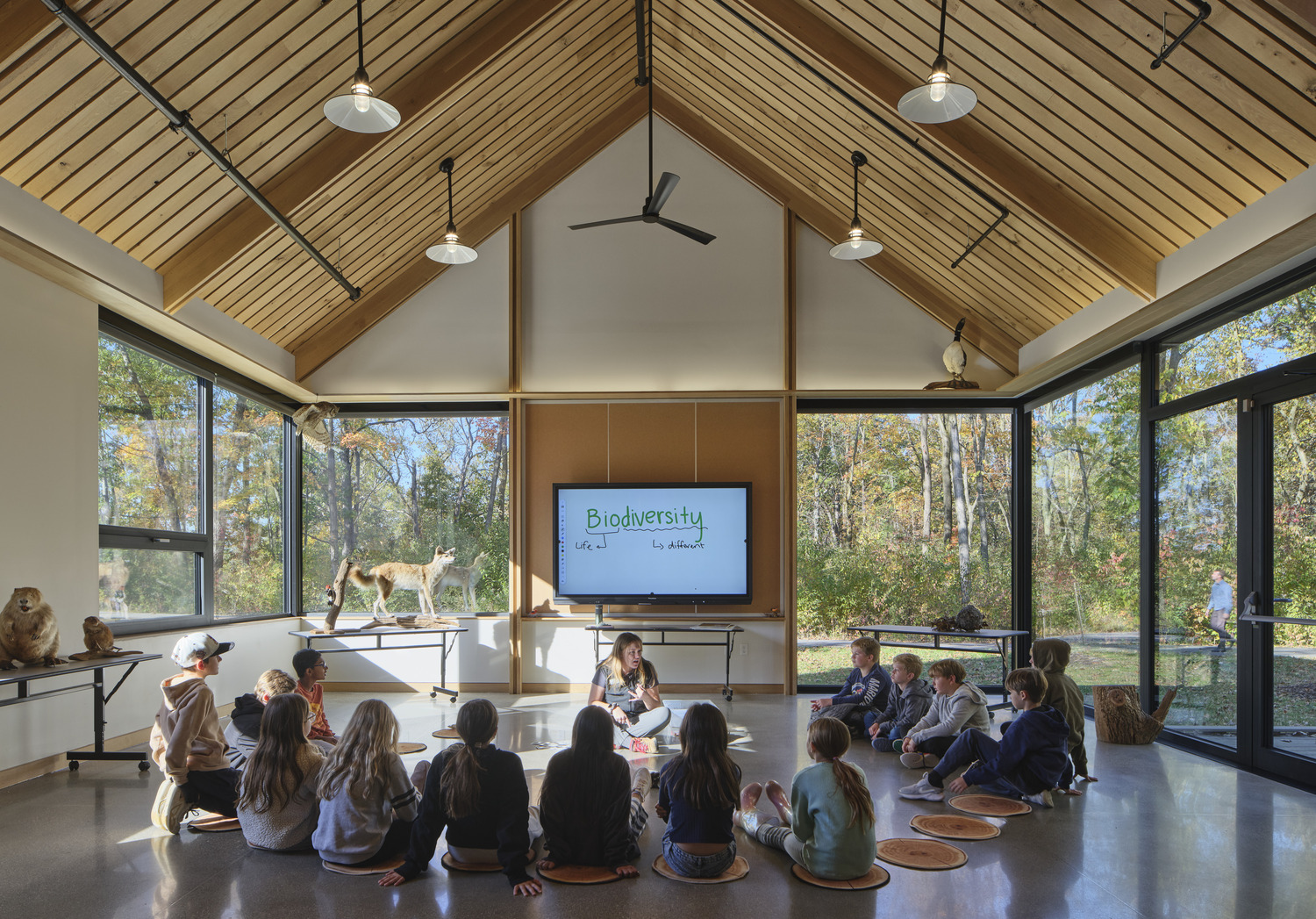
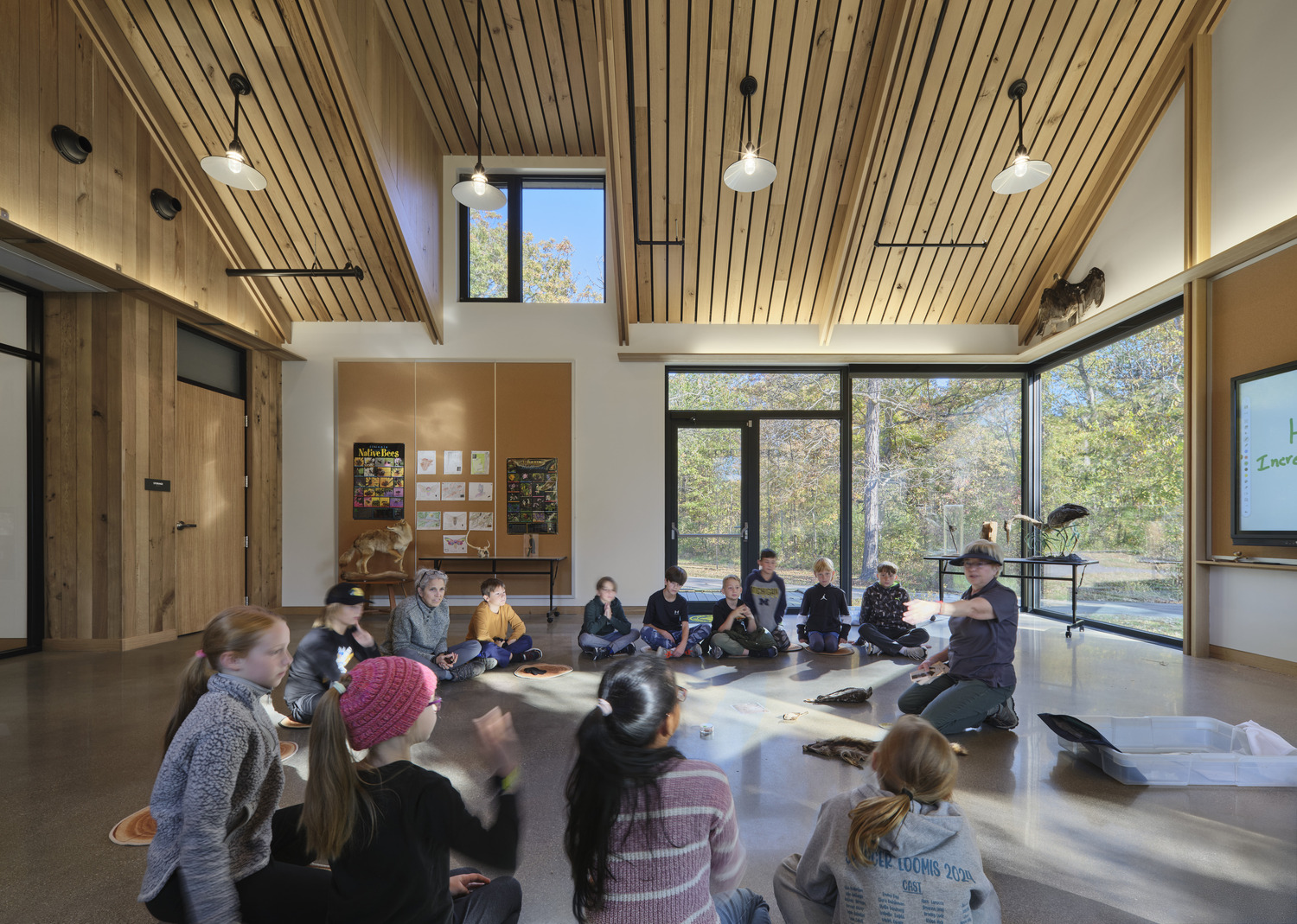
Nestled at the edge of the flatwoods along the Des Plaines River, the Ryerson Woods Education Center is a beacon of ecological education and environmental stewardship for the Lake County Forest Preserves and the greater region. Supported by a grant from the Illinois Clean Energy Community Foundation, the Phius ZERO-certified facility uses 80 percent less energy than a comparable code-compliant building. Serving as a trailhead to the 565-acre preserve, it protects this fragile ecosystem and tells its story through visible demonstrations of water conservation, renewable energy, material resiliency, and educational programming with local schools and community partners.
A Purpose Rooted in Stewardship:
The Ryerson Woods Education Center was conceived as a project that integrates environmental stewardship, education, and community connection at every level. Its purpose is to bring people closer to nature within the Chicago metropolitan regionproviding a place where school groups, scout troops, families, and visitors can experience the ecosystems that define northern Illinois. From hosting maple syrup harvesting demonstrations to seasonal hikes and school programs, the building serves as both a gateway and a guide to understanding the forest. As Lake County Forest Preserves Executive Director Ty Kovach expressed, the goal was to create an enduring example: a building that could become a viable model of long-lasting, energy-efficient design for the residents of Lake County and beyond.
This goal aligns with the Forest Preserve's longstanding commitment to sustainability, which includes constructing the first LEED Platinum public building in Lake County nearly twenty years ago and working toward net zero operations across all facilities. As their first purpose-built net zero project, the Education Center embodies these values operationally and educationally.
An Integrated and Collaborative Design Process:
Design for integration began with an intensive interdisciplinary charrette bringing together architects, engineers, interpretive designers, educators, facilities staff, and Forest Preserve leadership. The team performed an early energy-use inventory across existing facilities and identified strategies for reducing loads through passive design. This analytical foundation led to pursuing Passive House certification as the clearest, most values-aligned path for achieving net zero energysupported by a grant from the Illinois Clean Energy Community Foundation requiring third-party certification.
Whole-building energy modeling using WUFI Passive began early and continued through documentation and construction, informing the buildings form, orientation, window placement, and envelope strategies. Continuous verification and testing by third-party agents ensured that the building performed as modeled. Shaping the building according to passive principles resulted in a highly efficient, residentially scaled structuresending a message that net zero and Passive House strategies are achievable and relevant at the scale of a typical home.
Connecting People to Place:
The project fosters sensory and experiential engagement with the forest. Warm, light-filled classrooms connect to an accessible network of interpretive trails, while a screened outdoor classroom blurs the boundary between indoors and out. Interpretive elements throughout the building and site use biomimicry to explain passive designshowing how acorns, beaver lodges, and bird feathers mirror concepts like airtightness, insulation, and heat retention. Alongside these nature-based stories, an energy dashboard and QR-enabled exhibits offer visitors personal actions to take and deepen the connection between building performance and environmental stewardship.
A Building the Community Will Fight to Preserve:
Rooted in place, shaped by passive strategies, and dedicated to education, the Ryerson Woods Education Center is designed to become a beloved forever building. It supports year-round public programs, strengthens community identity, and offers a relatable model of sustainable choices. By providing environmental, economic, and social benefitsfrom lower operating costs to richer learning experiencesthe building demonstrates how integrated design can create a lasting resource the community values, protects, and champions for generations to come.
Project Team:
- Owner & Landscape Architect: Lake County Forest Preserves District
- Structural: Desimone
- MEP: Affiliated Engineers
- Energy Monitoring: Powerwise
- Civil: V3
- Interpretive Design: EDX
- Wastewater: Biohabitats
- Waterproofing: Acton Partners
- General Contractor: Wight & Company
- Phius Verifier: EcoAchievers
- Commissioning Agent: Farnsworth Group


